Páginas

Friday, June 25, 2021

Richard Strauss, "Burlesque", in D major


Although he was affable and even simple in his dealings with friends, the German composer Richard Strauss did have a reputation for arrogance and pride. Life had favored him generously, from his birth in a wealthy and musically rich family environment where he never lacked for anything to the long existence he enjoyed without major setbacks. So, it is not surprising that he saw himself as an artist of privileged and exclusive talents, which, of course, he was quick to show early on.
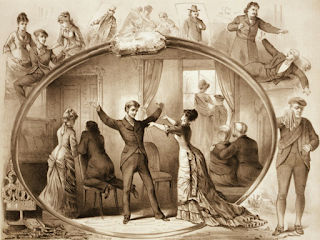

At the age of 16, his First Symphony was premiered; at twenty his name reached North America with the premiere in New York of the Second Symphony. Five years later, the tone poem Don Juan opened the doors of the world's stages, and at the age of forty the opera Salome made him the most famous composer of his time... Richard Strauss, mature, had something to be proud of.

von Büllow's assistant
In 1884, after hearing Strauss conduct a work without prior rehearsal, the prestigious pianist and conductor Hans von Büllow recommended the 20-year-old as chorus master and his assistant conductor in the celebrated Meiningen Orchestra, which von Büllow was in charge of. In return, Richard Strauss wrote a scherzo for piano and orchestra for his benefactor.

Richard Strauss (1864 - 1949)

A difficult work
The benefactor, however, refused to study it. He claimed that the piano part was untouchable, especially for small hands, as was his case. Strauss agreed and put the piece aside for some time until in 1889 he met a Liszt pupil, the pianist Eugen d'Albert, who suggested some changes that Strauss gladly took up. The piece, dedicated this time to d'Albert, and renamed Burlesque, was premiered in Eisenach, Bach's birthplace, on June 21, 1890.

Burlesque for piano and orchestra 
With a novel orchestration, the work gives an important participation to the timpani. Its title refers to its parody character, in the style of mid-century burlesques intended to mock some other work, usually an opera.

The rendition is by the Berlin Philharmonic, with Martha Argerich at the piano and Rainer Seegers on timpani, conducted by the late Italian maestro Claudio Abbado.

Thursday, June 24, 2021

Haydn, Piano Concerto No 11


If an enthusiastic music lover of Joseph Haydn's work wanted to listen to all his music continuously, he would have to allocate two weeks with their days and nights because the prolific author of the oratorio The Creation produced approximately 340 hours of music throughout his life, more than Bach or Handel, or Mozart or Beethoven.

Music for the Court
True enough, the Austrian master did not live a short life. He died at the age of 77 (more than twice Mozart's life), but such a huge production might not have been possible without his stay for nearly thirty years in the service of the princes of Esterházy, in the role of a liveried servant in charge of producing music for the court.

Franz Joseph Haydn (1732 - 1809)
Before the liveries
But it was not always like this. As a teenager, Haydn had to earn an income in a variety of ways. He was even a street musician, participating as a singer in serenades offered to unattainable ladies, before becoming the most prominent beneficiary of the patronage system initiated in the Renaissance.

Last years
But so prodigal patronage came to an end in 1790, when a deaf prince acceded to the court and disengaged himself from Haydn. The master, widely known throughout Europe and regarded as the most important living musician, continued to compose, mainly oratorios and masses, until 1803, when he had to give up his work due to age-related decline. He secluded himself in his house in Vienna, responding to the numerous invitations with an epigraph taken from a composition of 1796: "All my strength is gone. I am old and tired."

Piano Concerto in D major
Twelve keyboard concertos Haydn wrote, four of them published during the composer's lifetime. The second of these is the most popular, the Concerto in D major Hob. XVIII / 11, published in Vienna in 1784. ("Hob", sometimes just "H", comes from Anthony von Hoboken, creator of the catalog).

Movements:
00:37   Vivace  - Two themes, introduced first by the orchestra and then by the soloist. The development section is primarily concerned with the first theme; the recapitulation briefly quotes the second.
08:45   Un poco adagio -  A long-breathed melody, followed by a repeated note theme.
17:44   Rondo all'Ungarese  - This is constructed from an authentic Bosnian folk dance, called Siri Kolo, which the composer introduces in the opening theme, then takes up again in the climax.

Ivan Fisher conducts the Deutsche Kammerphilharmonie Bremen.
At the piano, the outstanding Russian maestro Mikhail Pletnev.

Friday, June 18, 2021

Anton Arensky, piano trio

 
Anton Arensky, Russian composer, conductor, and pianist born in Novgorod, Russia, in 1861, was the son of amateur musicians. Perhaps they saw in him the realization of the professional future that had been denied to them because as soon as the child Anton showed some musical aptitudes, the family moved to St. Petersburg so that the offspring could continue his studies in the Conservatory of the city. They were not wrong, because after graduating with a gold medal in 1882, Anton Arensky was hired by the Moscow State Conservatory, joining the teaching staff as its youngest member.

A miniaturist
Despite this promising start, Arensky never managed to enter the major leagues of Russian musical writing as a composer, as his pupils Scriabin and Rachmaninoff would. His style, miniaturist, unfolded better on the small scale, because in the larger-scale compositions he was indebted, first, to Rimski-Korsakov, and then to Tchaikovsky, although without reaching their genius. In his early forties, he opted for the performer's variant and toured Russia as a successful pianist and conductor on extensive, hectic, and vital tours. His somewhat dissipated lifestyle led him to die of tuberculosis at the age of 44.

Anton Arensky (1861 - 1906)
The oblivion of eighty years
As Rimsky-Korsakov indelicately predicted at his funeral, Anton Arensky was soon to be forgotten. Indeed he was, for a long time. It is only since the eighties of the twentieth century that there has been a renewed interest in his work. Much of it has been recorded, and today it is not uncommon to attend the performance of some of his pieces on the stages of the world. Author of a piano concerto, a violin concerto, and two symphonies along with other minor works, his Piano Trio in D minor is today part of the standard chamber music repertoire.

Piano Trio in D minor, opus 32
Composed for piano, violin, and cello, the distinctly post-Romantic work was written in 1894 in memory of cellist Karl Davidov, a friend of the composer and director of the St. Petersburg Conservatory while Arensky was his pupil.

Movements:
00:00  Allegro moderato
12:30  Scherzo: Allegro molto
17:56  Elegia: Adagio
24:30  Finale: Allegro molto

The rendition is by the artists Gil Shaham (violin), Arnon Erez (piano), and Rafael Wallfisch (cello).

Beethoven, "Leonora" Overture

 
One of the rare occasions in which the concert halls around the world have been crowded with active military personnel took place in Vienna in 1805 on the occasion of the premiere of Fidelio, Beethoven's only opera. With the city occupied by Napoleonic troops, most of the audience was made up of officers and non-commissioned officers of the French army. Unperturbed, they attended the performance of the first version of the opera in the Theater an der Wien. By the way, the reception was pitiful.

Fidelio - a second version
Beethoven revised the work the following year. After rearranging some sections and reducing the original three acts to only two, it was performed again in March 1806 at the same theater, this time successfully. But the composer had begun to suspect that he was not receiving the full economic benefits that were due to him, and soon after decided to withdraw the work from the stage.

Third version
A new performance only took place in 1814, when, after the revision of some texts, it was featured at the Kärntnertor theater with the title "Fidelio" together with an overture of the same name. The work, initially inspired by the play "Leonora, ossia l'amore coniugale", by Jean N. Bouilli, tells the story of Leonora who, in her endeavor to rescue her husband – a political prisoner – from a 17th-century Spanish prison, goes to work there disguised as a man, as a certain Fidelio.

Leonore Overture No. 3 in C major, Op. 72
Each of these three versions featured a different overture. The last one, as already mentioned, featured the Fidelio overture. The first included what is known today as Leonora No. 2 (composed No. 1 for a performance in Prague that never took place). It was the second version – that of 1806 – the one performed with the overture that has come down to us as Leonora No. 3, opus 72, and which has finally proved to be the favorite of audiences and conductors, with the exception of the French who, it is said, still prefer No. 2 as it would be the one Napoleon heard.

Daniel Barenboim conducts the West-Eastern Divan Orchestra.

Wednesday, June 16, 2021

Jean Sibelius, "Valse Triste"


Born on December 8, 1865, in the provincial town of Hämeenlinna, the most important Finnish composer of all time was christened Johan Julius Christian Sibelius, but at the age of 21, he decided to Frenchify his name. He had recently abandoned his law studies against his family's advice and decided to follow the impulse of his early musical vocation. Betting on the future internationalization of his career, he henceforth went by the name Jean.

Jean Sibelius was quite right. In 1892, his symphonic poem Kullervo gave him a prominent place in the musical scene of his country while warning the world that a new voice was emerging from northern Europe.

Jean Sibelius (1865 - 1957)

Success did not dazzle him, but it gave him enough confidence to decide to start a home. That same year he married Aino, sister of the composer and conductor Armas Järnefelt, who had introduced Sibelius into the family, which also had a son, Arvid, a writer.

Valse Triste, opus 44 n° 1
In 1903, Arvid asked his brother-in-law Jean to compose the incidental music for a play called "Death" (Kuolema). The work, which had a deep psychological resonance (as was to be expected), was premiered in December of that year, together with the six orchestral pieces that Sibelius wrote for it.

The first piece was entitled Tempo de valse lente - Poco risoluto. The following year, Sibelius revised it and premiered it as a brief concert piece under the name Valse Triste. It was an immediate success, to this day.

Nothing better than the opening bars of this piece to confirm the assertion that Sibelius is capable of establishing in a few seconds a sound world entirely his own. After a more lively middle section, a somber ending will close the piece with three mournful chords. It lasts about 

The rendition is by the Estonian Festival Orchestra, conducted by Paavo Järvi.