Born in Barcelona in 1778 into a wealthy family with a long-standing military tradition, Fernando Sor received from his father a fondness for the guitar and Italian opera. This enthusiasm was heightened when he joined the choir of the Monastery of Montserrat at the age of eleven, where he showed great musical abilities. But later he had to enroll in the military academy of Barcelona because the family was not willing that the military legacy was interrupted by his love of music. Against all odds, during the four years he remained there, he had enough free time to practice the guitar and train in composition.

Before the age of twenty, after composing his first opera, he left for Madrid. There he performed minor administrative tasks in government agencies while continuing to compose, privately. He was in that act of magic when, in March 1808, Napoleon invaded Spain and Ferdinand VII had to gently cede the crown to Joseph Bonaparte. After the mutiny of Aranjuez and the uprising of May 2nd, Sor saw his nationalist vein emerge and he fought the invaders with his music and songs of burning patriotic value. However, by 1810 he had already become accustomed to the new regime's presence.
 |
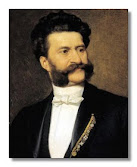
| Fernando Sor (1778 - 1839) |
After the complete defeat of the Spanish army, Sor accepted an administrative position under the rule of the new authorities, because, like many Spaniards, despite the occupation, he also saw in the ideals of the French Revolution an opportunity for the fall of absolutism in his own country. When the French troops withdrew in defeat in 1814, Fernando Sor, together with numerous Spanish intellectuals – the "Frenchified" guys –, left with them for Paris. He never returned to Spain.
A prolific composer
In Paris, London, and Moscow, Fernando Sor developed an extensive and successful career as a guitarist and teacher. Although he composed music for diverse instrumental ensembles, the composer is remembered today mainly as an exceptional guitarist whose corpus of more than one hundred works for the instrument constitutes today an important share of the "classical" repertoire for concert guitar. Among his most popular pieces, his Variations on a theme by Mozart stand by far.
Introduction and variations on a theme by Mozart, Op 9
Published in 1821 and dedicated to his brother Carlos, the thematic material is taken from the finale of the first act of The Magic Flute, the aria "Das klinget so Herrlich", which Sor liked to translate as "O cara Armonia". A highly demanding piece for the performer, it consists of an introduction and five variations (the icing on the cake).
The rendition is by the superb Croatian guitarist Ana Vidovic.