Páginas

Monday, January 24, 2022

Manuel María Ponce, Suite in A minor


Only two years after entering the National Conservatory of Music in Mexico City, Mexican pianist and composer Manuel María Ponce felt that he had learned nothing, or at best, very little. So in 1903 he abandoned his formal studies and returned to the family home in Aguascalientes, capital of the state of the same name, where he began to work, at the age of 21, as a private piano and solfeggio teacher. The composer, had to wait...
Popular songs
The traditional National Fair of San Marcos that was held there every year gave him the splendid opportunity to listen to the autochthonous music played by the traveling troubadours who moved from fair to fair sharing their vast repertoire of popular songs. A very rich material that Ponce thought could be the basis for the creation of genuine Mexican classical music. These were the beginnings of Mexican musical nationalism, which Manuel Ponce is regarded as its father, although it was his future student, Carlos Chávez, who would consolidate the movement.

Travelling to Europe
But in order to carry out all this it was urgent to broaden his knowledge, and for that there was no better way than to set off to Europe. So the Mexican composer first ventured to Bologna, Italy, and from there he went to Germany where between 1906 and 1908 he refined his piano technique with none other than Professor Martin Krauze, a former student of Liszt, who shortly thereafter would become Claudio Arrau's teacher and trainer.

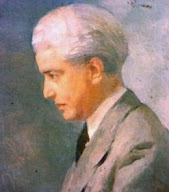
Manuel M. Ponce (1882 - 1948)
A friendship with Segovia
Some years later, after two seasons as conductor of the Orquesta Sinfónica de México, he was assigned to study composition under the guidance of Paul Dukas. There he was fortunate to have Joaquín Rodrigo and Heitor Villa-Lobos as fellow students.
In the new journey he also forged a great friendship with Andrés Segovia, since the maestro Ponce, besides being a pianist, also mastered the guitar. Proof of this are his nearly 40 compositions for guitar, including sonatas, sonatinas, preludes, studies and suites.
Suite in A minor
Presented here is his Suite in A minor for guitar, from 1929, composed while Ponce was pursuing his degree in composition at the Ecole Normal de Musique de Paris, and written specifically in the style of the baroque suite at the request of the friend to whom it was addressed, Andrés Segovia.

Sections:
00 
     Preludio
02:41  Allemande
05:23  Sarabande
09:56  Gavota I y II
12:37  Giga

The rendition is by Armenian guitarist Gohar Vardanyan.

Saturday, January 22, 2022

Chopin, Piano Concerto No 1


When Chopin settled in Paris in 1831, six years earlier the German-born pianist, teacher, and piano maker Friedrich Kalkbrenner had done the same. After a long period in London as a pianist and businessman, he had arrived in the City of Light, the center of European musical activity at the time, carrying the title of "the best pianist in Europe", made up by himself. Twenty-one-year-old Chopin, a newcomer, came to him for advice and contacts. Kalkbrenner offered to make him an accomplished virtuoso within three years if he would take lessons with him.


Chopin hesitates
It is true that Chopin had not had a piano teacher until then. Those who gave him the basic tools were his teachers in Warsaw, but one was a violinist and the other a composer. So it is not surprising that he wrote enthusiastically to his parents and sisters that he intended to stay in Paris for "about three years," precisely the time frame suggested by Kalkbrenner. But his enthusiasm for his potential teacher waned as, with the weapons he already possessed, he dazzled those attending the Parisian soirées where he was invited to play. Finally, Chopin resigned Kalkbrenner's support but he honored him with the dedication of his Concerto in E minor, when it was published in Paris in 1833.

A young Chopin, by Ary Scheffer
The second concerto
It was the second piano concerto Chopin wrote, but the first to be published. For this reason, the publisher assigned it No. 1. The first had been the Concerto in F minor, which would be published three years later, in 1836, and consequently designated as No. 2.
Both were composed in Warsaw, when Chopin was between 19 and 20 years old. They both had their premiere on the occasion of the numerous soirees organized to bid farewell to the young virtuoso who was leaving Warsaw with the idea of being away for "about three years", but who would never return.

Concerto No. 1 in E minor, opus 11
Then and now, there has been no shortage of opinions about the weakness, or the lack of ingenuity or brilliance of Chopin's orchestration. Uninteresting, is the most common imputation. It happens that the young composer does not have as models the Beethovenian or Mozartian concerto, but those of his contemporaries, less notable (Hummel, Hiller, or Kalkbrenner himself), in which the piano is openly the protagonist, with the orchestra on a secondary plane, in charge of the initial exposition of the themes and of underlining the moments of great expressiveness in support of the soloist. What they all agree on is that the piano writing is unparalleled.

Movements:
There are three, typical of the period:
00        Allegro maestoso
21:07  Romance. Larghetto
30:56  Rondo. Vivace

From the Philharmonic Hall, Warsaw, on 27 August 2010. Martha Argerich and the Sinfonia Varsovia Orchestra under the baton of Jacek Kaspszyk.


Friday, January 21, 2022

Mozart, Piano Concerto No 21


By the time he was seven years old, Wolfgang Amadeus Mozart had toured the European courts playing the piano with the keyboard hidden by a cloth, and before the age of eight he had composed his first symphony. Therefore, when he settled in Vienna in 1781, at the age of 25, he did so with the determination to make a living by cultivating both skills, that of pianist and that of composer, to the highest degree possible. So nothing could have made more sense than to compose his own concertos and conduct them from the piano, accompanied by an orchestra put together and hired for the occasion.


Leopold disagrees...
His father, Leopold, was not in favor of the idea. From Salzburg, he strongly reprimanded him in an epistolary argument in which he argued that his destiny lay in some glamorous European court and not in his turning into a free-lance musician, a concept that, of course, did not exist. The icing on the cake was put by Wolfgang the following year, when, without Leopold's consent, he married Konstance Weber.

The concerto production
By this time, Mozart had composed six piano concertos. And life as a couple only increased his output significantly. In the 1782-83 season, he composed three concertos, which were received enthusiastically by the Viennese public, prompting him to double the stakes with the creation of six more concertos in 1784. The subscription concertos with his own music proved to be an excellent vein, although in the following two years he slackened his pace slightly: he composed only three.

The good years
Leopold had to pull back. He was pleasantly surprised. His son was living in Vienna happily married and managing on his own.
These are, by the way, Konstance and Wolfgang's best years: they have a gracious one-year-old baby (i.e., he has survived so far), they live in a posh section of Vienna, they have hired servants, and Wolfgang is looking for an opportunity to confess to Konstance that he is about to purchase a billiard table.

Concerto No. 21 in C major, K. 467
No sooner had Mozart finished Concerto No. 20 in D minor than he set about composing the next concerto, which was to become the most popular of them all. In just four weeks, while teaching and attending to his visiting father, Mozart began and completed the Concerto in C major, premiered at the Burgtheater in Vienna, with Wolfgang at the piano, on March 10, 1785, one day after adding it to his catalog.
The widespread reputation it enjoys today is due, malgré tout, to the inclusion of its second movement, Andante, in the soundtrack that accompanied the romantic story told in the 1967 Swedish film Elvira Madigan. Neil Diamond, for his part, added to the piece's popularity with his 1972 song Song Sung Blue, although he didn't tell anyone about it.

Movements:
The typical three of the classical period: fast - slow - fast.
00         Allegro maestoso
14:23   Andante
20:55   Allegro vivace assai

Maestro Vladimir Ashkenazy at the piano conduces The Philharmonia Orchestra.

Thursday, January 20, 2022

Rimski-Korsakov, "Capriccio Espagnol"


That morning, the girl in charge of the store was surprised to see a tall, lanky sailor enter the store in her direction, slightly raising his Russian naval officer's cap. The officer wandered among the shelves filled with books of all kinds and stopped in front of what appeared to be the section reserved for music. The girl watched him complacently and was even more pleased when she saw him approaching with a volume in his hand. They spoke in French, the officer fluently, the girl rather hardly. After leaving the tent, the officer looked happy. He was carrying in his hands the compilation "Cantos y Bailes Populares de España", by the Spanish composer José Inzenga y Castellanos.


The officer's name was Nikolai Rimski-Korsakov and he was serving on the frigate Almas, which two days ago had made port in Cadiz, on its way back to St. Petersburg after almost two years of cruising around the world.
Rimski, who, as you may have guessed, was also a musician, was 21 years old at the time. He had already composed his first symphony, greeted an enthusiastic audience on its premiere, and was a member of The Five, a group of Russian composers who advocated the creation of a specifically "Russian" music, as opposed to one that simply imitated the style on which European music had been based until then.

Rimsky-Korsakov (1844 - 1908)
1864 picture 
Folklore from other lands

But just as Russian themes were promoted, the group was not opposed to using folk motifs from other lands. Therefore, it is not surprising that the visionary Rimsky got hold of Inzenga's songbooks twenty years in advance of their orchestral treatment in a symphonic work. The result of such a profitable acquisition was the composition of one of his most popular works, Capriccio Espagnol, composed based on the themes that he met in Cadiz that morning in 1865.

Capriccio Espagnol, op. 34
With the original title of Capriccio on Spanish Themes for orchestra, it had its premiere on October 31, 1887, in St. Petersburg, conducted by the composer. The themes, mainly Asturian, are approached in the "Russian manner" with an orchestral treatment that highlights Rimsky-Korsakov's genius as an orchestrator. The work, applauded by the instrumentalists during rehearsals, was dedicated to all of them. Its premiere was enough for its immediate incorporation into the standard repertoire, and it remains there to this day.

The rendition is by Joven Orquesta Nacional de España, conducted by Lutz Köhler.


Movements:
   00  Alborada   Festive dance, typical of Asturian music.
1:20  Variations   The theme is introduced by the horns, followed by four variations. 
6:14  Alborada   Recreation of the first movement theme, with different instrumentation and in a different key.
7:25  Gypsy scene and song   Series of dances. The last dance links without pause with the last movement (atacca):
12:40  Asturian Fandango.
The work ends with a new exposition of the Alborada theme, somewhat more spirited.

Sunday, January 16, 2022

Johannes Brahms, Wiegenlied ("Lullaby")


For millennia, mothers around the world have sung lullabies to their babies to induce sleep or stillness. But it has not always been tenderness or love that drives them. Some contain a scolding to the child for crying, or a serious threat if he continues to make noise. The oldest documented song recently discovered in what was once Babylonian dates back four thousand years. It warns the baby – in cuneiform writing – that his crying will awaken the devil, and that if he does not shut up immediately, the devil will have no choice but to eat him.


Fortunately, the English lullabies, French berceuses, or German Wiegenlied of the much later and romantic 19th century show other moods, where tenderness and affection are lavished – the construction of attachment, we would say today, modernly. Usually in 6/8 rhythm and with scarcely another chord beyond tonic and dominant, a good part of the romantic composers worked the "form", because it was in demand of a nascent middle class. But there was one that greatly distanced itself from its peers, to this day. It is the work of Johannes Brahms.

Wiegenlied, opus 49 N° 4
Perhaps the most popular and world-renowned lullaby, it was published in 1868 and is dedicated to a lady friend of Brahms on the occasion of the birth of his second child, a lady with whom he is said to have been in love in his youth. With verses from German folklore, it was first performed in public on December 22, 1869, in Vienna. It was sung by the German soprano Louise Dustmann accompanied on piano by Clara Schumann.

In a version for cello and piano, it is presented here by the Hungarian cellist Lászlo Fenyó and the Russian pianist Kirill Krotov. As is obvious, it lasts less than two minutes.