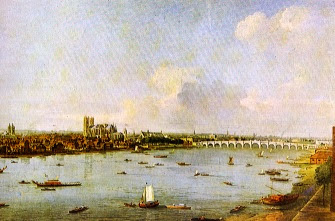
A large number of musicians have had their parents, good amateurs or even talented professionals, as mentors in the profession. But none to the extent experienced by Johann Christian Bach and three of his brothers. All four were sons of the illustrious father of harmony, Johann Sebastian Bach, and it was from him, no more and no less, that they received their first lessons, to continue as adults a musical career on the basis of their own merits. Maria Barbara and Anna Magdalena contributed to continuing the lineage in equal parts, in a span of twenty-five years. The former, mother of Wilhelm Friedemann and Carl Philipp Emanuel; the latter, mother of Johann Christoph Friedrich and Johann Christian.
Johann Christian
When Bach senior died in 1750, the youngest of the musician brothers, Johann Christian, fifteen years old, was sent to Berlin to live and continue his studies with his half-brother Carl Philip Emanuel, who at the age of 36 was already firmly established there. Determined to specialize in opera, Johann Christian later traveled to Italy where his first three works were such a success that his talent reached the ears of the kings of England, who called upon him as a composer of operas for the new King's Theater.
Johann Christian Bach (1735 - 1782)
The "Bach of London"
Queen Sophie Charlotte, a twenty-year-old german, was delighted with the engagement of this young fellow countryman, with whom she could speak in her own language and long for her homeland. It was also a happy time for Johann Christian (before a new impresario took over the theater and terminated the contract). He was the music tutor of the queen and her children, but he also had to accompany the king whenever he felt like playing the flute. And as a grand finale, in 1764 he had the privilege of meeting an eight-year-old musician, Wolfgang Amadeus, when the Mozart family visited London on one of their tours, and on whom he would later exert a powerful influence.
Concerto for Piano and String Orchestra in E-flat major Author of an extensive oeuvre that combines opera, sacred music, symphonies, and chamber music, Johann Christian Bach was one of the first harpsichord masters who knew a pianoforte and wrote music for the instrument. Of a total of 26 keyboard concertos, the concerto in E flat, opus 7 No. 5, is one of those that received the title of "piano concerto".
Movements
Written around 1770, it is structured in the traditional "classical" style, in three movements: fast - slow - fast:
00:00 Allegro di molto
06:09 Andante
11:48 Allegro
The performance is by the British orchestra The Hanover Band, with period instruments.
In order to make an important and moving contribution to the war effort during World War II, the English conductor and composer Eugene Goossens called upon several American composers for the composition of a fanfare (a short composition written for brass instruments) that would open every concert of the Cincinnati Symphony Orchestra in the 1942-1943 season. Goossens was then serving as the orchestra's musical director and his intention was to replicate the experience carried out during the First War, with British composers.
The reception Goosens' initiative was warmly welcomed by eighteen American composers who responded by contributing an equal number of compositions. Goosens had suggested ingenious titles such as "fanfare for the soldiers", or "for the airmen" and others of similar inventiveness.
Copland's contribution
Goosens was pleasantly surprised with the work proposed by the Jewish composer of Russian origin, Aaron Copland, who had studied with Nadia Boulanger in Paris in 1921 and had been closely acquainted with the compositions of Stravinski, Darius Milhaud, and others. He had also become a great admirer of French literature, particularly that of André Gide, a future Nobel Prize winner.
Coplan entitled his work "Fanfare for the common man".
Aaron Copland (1900 - 1990)
Fanfare for the Common Man
Out of the eighteen works that opened the concerts of that season, Copland's splendid title is the only one that has not passed into oblivion. In addition to being part of the traditional orchestral repertoire, it has been the subject of countless rewrites and quotations by various popular groups, the first in 1977 by the British rock band Emerson, Lake & Palmer. The Rolling Stones and Bob Dylan would continue to recreate the piece, freely, opening their shows with it, as in its genesis.
Copland himself, after the war, adopted the work as the introduction to the fourth movement of his Third Symphony.
The work, a must in any festive ceremony of our days, is written for four horns, three trumpets, three trombones, tuba, timpani, and gong.
The performance is by the New York Philharmonic Orchestra, conducted by James Levine.
In March 1877, the brilliant Russian composer Pyotr Ilyich Tchaikovsky received a letter from a stranger in which she expressed her deep admiration for his work. Other, increasingly passionate letters followed. The 37-year-old composer already had a well-established career, so letters from admirers did not drive him crazy: receiving them had become an almost daily occurrence.
Piotr Ilich and Antonina, in 1877, during their "honeymoon"
Pyotr Ilyich, a sensitive nature With a tendency to depression and subject to recurrent nervous breakdowns, Pyotr Ilyich did not, however, dare to contact the stranger. And it was not a matter of fearing gossip, for the Moscow society in which he lived in those years had long been commenting sotto voce, sometimes acrimoniously, on some of the master's behavior, deemed scandalous. The author who that same year was going to give the Russian bourgeoisie and aristocracy the most popular ballet in history, Swan Lake, was one step away from seeing his virility openly questioned.
Antonina That is why he finally took the plunge. Pyotr Ilyich ended up meeting Antonina Miliukova, who turned out to be a young, moderately educated 28-year-old woman with pleasant features and an easy smile. Pyotr Ilyich then took the other step. Just four months after receiving the first letter from his unknown admirer, Antonina and Pyotr Ilyich were married. The composer took Antonina as his wife and, in passing, as a retaining wall against the advance of rumors that encouraged the suspicion of an improper sexual inclination.
The denouement The decision had disastrous results. For two endless months, Pyotr Ilyich was not able to approach the marriage bed, he had no strength for it and the marriage ended right there. They decided to separate, without grudges. The composer fell into a depression of such magnitude that he almost committed suicide. Antonina, in turn, went back to sending letters to other celebrities to whom she lied, as did to Piotr Ilich, about her noble origin, and with whom she always ended up falling in love. Antonina did her part too and ended her days in an asylum for the mentally ill.
Violin Concerto - First movement Pyotr Ilyich Tchaikovsky's Violin Concerto was composed in March of the following year, exactly one year after Antonina's first letter, in a lakeside resort in Switzerland, where he had fled to recover from depression. The work, in three movements, was initially rejected even by great virtuosos who considered that it presented insurmountable difficulties for the time.
The first movement lasts about 20 minutes. [Complete concerto with a listening guide, here]. The abridged version presented here is from the 1947 film Carnegie Hall, featuring one of the most remarkable violinists of the 20th century, Lithuanian master Jascha Heifetz, who plays himself in the film.
Le Concert The more recent French-Russian film, Le Concert, does the same and presents as its final scene a mixture of the first and third movements, with a somewhat disastrous orchestra (responding to the plot) that happily ends up taking hold.
Nine years before making the fatal blunder of marrying Antonina Milyukova, the young 28-year-old author Peter Ilyich Tchaikovsky was on the verge of making the same mistake, organizing for himself a rehearsal of the disaster of his own life. Fortunately, on the occasion it was the fiancée herself who thwarted the plans, by the simple means of abandoning her fiancé to marry another.
A prima donna
It was 1868 when Tchaikovsky met the Belgian soprano Désirée Artôt, five years his senior, who was then on tour in Russia as part of an Italian lyric company. They met at a palace party and seemingly became infatuated with each other. Something more Artôt on Piotr Ilich than this one on her, because in the course of the friendly relationship prior to the vital decision it was Désirée who was sending the daily letters and invitations, while Piotr Ilich thought that it was better to see each other only once in a while.
A life together...
By the end of 1868, however, they both began to think seriously about marriage. But Désirée's mother, who was traveling with the artist and had an eagle eye, did not take long before she learned of the composer's sexual preferences. She did not approve of the liaison and convinced her daughter that it was not good for her career to become engaged to a novice composer. For his part, Tchaikovsky, unlike nine years later, began to glimpse that engagement to a prima donna was not the best way to prevent the steady advance of rumors and gossip.
Désirée Artôt (1835 - 1907)
Désirée switches her mind
The decision was postponed. They arranged to meet in the summer of 1869, in Paris. But the meeting did not take place. In September of that year, on the way to Paris from Warsaw where the company had gone after leaving Russia, Désirée married a Spanish baritone, seven years her junior and a member of the lyric company. Tchaikovsky learned of this through third parties. As he would later say, she was the only woman he ever loved. The Romanza in F minor is dedicated to her.
Romanza in F minor, opus 5
Composed in November 1868, the short piano piece will be added to the young composer's creative corpus, which by that time included a cantata, an overture, a symphonic poem, a symphony, and two operas. Years later, Tchaikovsky would destroy the symphonic poem and the two operas, and renounce the cantata, the overture, and the symphony. But the Romanza in F minor will remain unscathed to such a phenomenal degree of self-criticism. Today, with its sentimental melody and simple three-part structure, it is one of the Russian composer's most performed solo piano works.
The performance is by Iranian-born American pianist Sara Daneshpour.
Despite entering the Paris Conservatory before the age of ten, winning the first prize in solfège just six months later, being awarded first prize in piano at the age of 14 and, finally, obtaining the coveted Prix de Rome at 19, the French composer Georges Bizet often found it difficult to have his works performed. And on the occasions when he managed to overcome the obstacles during his short life, his works generally received a cold reception.
So it was the case, for example, with the 1862 opera Ivan IV, based on the life of Ivan the Terrible, which was only staged for the first time in 1946! Furthermore, on the occasions the first reception was favorable, as happened with La Jolie Fille de Perth of 1867, some financial difficulties of the organizers forced the performances to be canceled after only 18 stagings. It seemed to be the fate of Georges Bizet.
Georges Bizet (1838 - 1875)
Carmen And the case of his masterpiece and final work Carmen was no different, although in this case the difficulties could be anticipated, due to the drama's subject matter, starring a strong-willed gypsy and not a fragile maiden. (The performance of the protagonist was described by one critic as "the very incarnation of vice"). First performed, after the usual delays, on March 3, 1875, it had a hesitant reception, although after a while it began to meet with public approval. But Bizet did not get to know it. He died three months after the premiere, before his 37th birthday, convinced that he had conceived a new failure.
Carmen Suites Some years after Georges Bizet's death, his close friend and collaborator Ernest Guiraud made two compilations of arias, preludes, and interludes from the opera, making up two orchestral works that he called Suite N°1, published in 1882, and Suite N°2, from 1887. Each of the suites is made up of six pieces. The version presented here is a "mix" of both suites and contains only four pieces, three of them from the first suite, and the famous Habanera, from Suite No. 2.
00 Preludio - In the opera, it came after the overture.
3:52 Aragonesa - Introduction to Act IV. This piece and the previous one make up the first "piece" of Suite No. 1.
6:58 Habanera - Carmen's aria from Act I; included in Suite No. 2.
9:28 Los toreadores - taken from the Prelude to Act I and the March of the Toreadors from Act IV.
The performance is by the youth ensemble Symphony Orchestra and Mixed Choir of the Kranj High School, Slovenia, conducted by its director, also Slovenian, Nejc Bečan.