A delicious two-minute a half of music.
Wednesday, October 12, 2022
Chopin, Waltz op 70 No 3
A delicious two-minute a half of music.
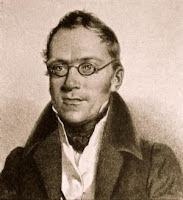
Karl Czerny, pedagogue and composer, Variations on "La Ricordanza"
Karl Czerny, the Viennese composer and pedagogue, is remembered today mainly for his pedagogical work. Every piano student has had to deal with his etudes and exercises on speed and fingering. Not for nothing is he considered one of the fathers of modern piano technique. As a teacher, he taught Liszt. As a student, he was a pupil of Hummel, Salieri, and Beethoven. He was a child prodigy, as befits every great pianist.
"I, undersigned, have the pleasure of attesting that young Karl Czerny has made an extraordinary advance on the piano, beyond what could be expected at the age of 14. I think he deserves all the help he can get, not only because of what I have just stated but because of his amazing memory."
A vast oeuvre
Karl Czerny (1791 - 1857)
Indeed, Czerny was one of the great pianists of the first half of the 19th century. In 1812 he premiered his master's Emperor Concerto in Vienna.
But he did not like to play in public. He did not tour much either, preferring to stay in Vienna and compose, in which he was prolific: his oeuvre totals more than a thousand published opus numbers, including masses, symphonies, concertos, and sonatas. He never married, and at his death he left an important fortune.
Variations on a theme by Rode
The 20th century, however, had forgotten him as a composer. Until 1940, when Vladimir Horowitz discovered some interesting variations, stemming from his writing. They are variations on "La Ricordanza", an aria by Pierre Rode, a French violinist and composer.
After Horowitz's discovery, the master and great pedagogue Karl Czerny has enjoyed a modest rebirth, rescuing part of his work in the last twenty years; the compositional work we say, because his pedagogical contribution has been continuously present for two centuries.
The performance is by the South Korean pianist Sangyoung Kim.
Tuesday, October 11, 2022
Chopin, Scherzo No 4, in E major
As in all the years following the trip to Majorca, the "family group" consisting of Chopin, George Sand, and her two children, spent the summer of 1842 in the vacation house the writer had in Nohant. It was a year in which life smiled on Chopin. In the company of his adopted family, he moved to a more comfortable residence in Paris, in February he gave a concert at the Salle Pleyel, and his creative work at Nohant paid off handsomely.
Monday, October 10, 2022
Béla Bartók, Violin Concerto No 1
The Hungarian composer Béla Bartók was a piano professor at the Budapest Academy when in 1908 he solemnly handed over the manuscripts of his first violin concerto to Stefi Geyer. The girl accepted them on the express condition that the work should only be known after death. After her death, we mean, because the girl, seven years younger, assumed that Bartók would be the first to leave this world.
Sunday, October 9, 2022
Ravel, "Valses nobles et sentimentales"
Although it was already known in Mozart's time, the musical genre of ternary rhythm known as waltz had in Europe its apogee and greater development in the XIX century. But, at the beginning of the 20th century, in a world that had long abandoned romanticism, it did not show signs of losing vigor. During the first decades of the new century, serious composers, and less serious ones too, kept on composing waltzes, danceable or not, thus showing its perennial and powerful presence.
Noble, and also sentimental
Maurice Ravel, who in 1928 would give the world his masterpiece, the famous Bolero, was no stranger to the trend. In 1906 he began to glimpse the sketches of La Valse, a work described as "the apotheosis of the waltz", and whose final version would be published in 1919. In the meantime, the author worked on a set of short pieces for piano that he titled Valses nobles et sentimentales in homage to Franz Schubert, who almost a hundred years ago had written two series of waltzes: the Valses sentimentales, of 1823, and the Valses nobles, in 1826.
![]() |
| Maurice Ravel, in 1925 (1875 - 1937) |
The work was privately premiered by the pianist Louis Aubert (to whom it is dedicated) on May 8, 1911, in Paris, in one of the recitals sponsored by the Société Musicale Indépendent to promote the most daring composers of the time. To that effect, the authors were not identified during the concert, thus forcing the audience to guess who the works belonged to. On the occasion, it is said that only Debussy, in attending there, was able to recognize in the Waltzes... the pen of the master Ravel.
The seven waltzes
The set is composed of seven waltzes plus an epilogue, marked as follows:
00 Modéré - très franc
01:52 Assez lent - avec une expression intense
04:03 Modéré
05:26 Assez animé
06:32 Presque lent - dans un sentiment intime
07:22 Very vivid
08:05 Moins vif ("the most characteristic of all", according to Ravel, foreshadowing the appearance of La Valse)
10:44 Epilogue: lent
Neither so noble nor less sentimental
Unlike Schubert's waltzes, nothing makes Ravel's waltzes seem "noble", and even less "sentimental". Harmonically complex and full of unresolved dissonances, the waltzes are not easy on the ear, although in Ravel's opinion everything is very simple: "it is always counted in three beats".
The year after its premiere, Ravel published an orchestral version, intended to accompany a ballet. Presented here is the original piano version by the Polish maestro Krystian Zimerman.