Páginas

Wednesday, December 7, 2022

Liszt, Études d'exécution transcendante / No 12, "Chasse-neige"


Liszt's famous studies known today as Transcendental Études took the author a good number of years to finish. The first seed dates from when the author was fifteen years old, and already had pupils, in Paris. Ten years later, the author revised the twelve original studies and proceeded to intensify the technical difficulties, since at that time he was himself a piano virtuoso. The final version would be published in 1852 under the title Douze Études d'Exécution Transcendante, dedicated to his teacher, Karl Czérny.
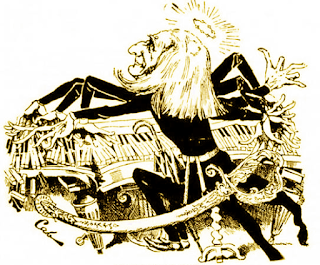
For practicing, or a challenge?
In this way, Liszt added his contribution to the current custom of writing works for piano intended for the practice and improvement of technical skills on the instrument. The most prominent contribution to the tradition up to that time was Chopin's Etudes, in two series, opus 10 and 25, the first of them dedicated precisely to Franz Liszt. But unlike the Polish composer, Liszt's Études do not have such a clear didactic intention. They do not seem to be designed for the practice of this or that specific technical difficulty, but rather as a challenge to the already experienced performer.

Chopin vs Liszt
Thus, for example, it is a general opinion that in order to approach Etude No. 4, Mazeppa, one must first have the skill that allows you to play "double thirds" with ease. On the other hand, with Chopin's Etudes, a pianist with, let us say, a timid left hand, may well decide to spend some time preparing the Revolutionary Etude precisely in order to transform this "timidity" into gallantry.

Etude No. 12 in B-flat minor, "Chasse-neige"
The twelve Etudes are rather heterogeneous in their conception. There are those of "pure music" as well as "programmatic". To the latter category belongs the last of the series, the one Liszt called "Chasse-neige". ("Pure" or "programmatic", all bear evocative or descriptive titles except No. 2 and No. 10). It is one of the five that pose the greatest technical difficulties of the entire series. The title alludes to a sort of "snowstorm" although the music itself is rather more tempestuous than an ordinary snowstorm might suggest.

The rendition is by Ukrainian pianist Valentina Lisitsa.

Tuesday, December 6, 2022

Erik Satie, "Embryons desséchés", pour piano


The clever and witty Erik Satie gained the recognition of his peers (or anything resembling it) when he was well into his forties. And here his colleague and friend Maurice Ravel had a unique role to play. In 1911 the author of the famous Bolero organized a monographic concert in Paris with works by Satie. It was the only occasion on which the Parisian public attended an evening entirely dedicated to pieces by the composer, the same one who twenty years earlier had astonished a few and baffled others with his now famous Gymnopédies.

From then on, his solo piano music gained great momentum. He had long since passed his "cabaret" stage, but he had not forgotten his sense of humor. During 1912-13 a series of humorous compositions came to light, which he titled in a somewhat outlandish way, adding comments to the score for the performer and, in passing, ignoring the bar division lines. From that period are, for example, Deux Preludes pour un Chien, Descriptiones Automatiques, and Embryons desséchés.

Embryons desséchés, pour piano ("Desiccated embryos")
Barely six minutes long, the piece is made up of three even more extravagantly titled sections, taken from the names of invertebrate beings that Satie came across in a school encyclopedia. But, there are no mentions here about embryos, desiccated or not.

Erik Satie, in 1820
(1866 - 1925)
What you do find are "quotations" to works by other authors.
The second piece contains a quotation from Chopin. In the "comments" for the performer, we read: "And then they all began to cry (quote from Schubert's famous mazurka)". As far as we know, Schubert never wrote a mazurka (let alone a famous one). The real quote is to the Interlude of the Funeral March (Sonata in B♭ minor), clearly not by Schubert but by Chopin, with which Satie toys for a couple of bars.

The "expression guides"
And as usual, the score is not lacking in "character indications" with which the author ousted the usual tempo and expression indications, replacing them with, say: Light as an egg - Like a nightingale with a toothache - Moderately, I beg you - A little bit warm, and the like.

Sections
00:00  d'Holothurie
02:13  d'Edriophthalma (3:02, the "quotation" from Chopin begins)
04:42  de Podophthalma

The rendition is by Ukrainian pianist Dina Pisarenko, during a break in the rehearsal/recording of another work, with orchestra.

Sunday, December 4, 2022

Beethoven, Sonata violin & piano "Spring"


Beethoven wrote ten sonatas for violin and piano in the span of fourteen years, from 1798 to 1812, although nine of them were born during a much shorter period, from 1798 to 1803, the year the famous "Kreutzer" Sonata was published. Almost ten years elapsed, then, between this famous ninth sonata and the last, of 1812, thus completing the corpus of ten sonatas that in the chamber works of the master from Bonn are graciously placed in second place in importance, only surpassed by the string quartets.


Sonata No 5 was composed between 1800 and 1801 when the beginnings of deafness were starting to worry him. Even so, it is a quiet and fruitful period for the master, established in Vienna since 1792. Composed along with Sonata No. 4, it is contemporary with the Piano Concerto No. 3 and the First Symphony.

"Spring" Sonata
Published in 1801, it is dedicated to Count Moritz von Fries, Beethoven's generous patron and recurrent dedicatee of his work (the Seventh Symphony would be dedicated to him). Also known as the "Spring" sonata, together with the Kreutzer they are the only two sonatas to bear the title with which they became popular after the composer's death.

Sonata No. 5 in F major, opus 24 - Movements
Its first sketches date from around 1795, so the Mozartian influence in it is somewhat visible, or if you prefer, "audible", in all the sections that make it up. This is a four-movement structure that Beethoven would use for the first time in this genre, although it should be noted that the added scherzo lasts a minute and a bit longer. Its complete audition takes just over twenty minutes.

00:00   Allegro – The violin sings, generously lyrical, over a delicate piano accompaniment.
11:51   Adagio molto espressivo – A nostalgic melody, first introduced by the piano.
18:10   Scherzo: Allegro molto – Deliberately asynchronous moments between the two instruments.
19:32   Rondo: Allegro ma non troppo – Perhaps the most "Mozartean" of the movements.

The rendition is by German violinist Anne-Sophie Mutter and American pianist Lambert Orkis.

Saturday, December 3, 2022

Chopin, "Tragic Polonaise", op 44

 
Although everybody wrote polonaises (there are those of Telemann, Mozart and Schubert, and the path will be continued by Mussorgsky and Tchaikovsky) the most famous and outstanding ones are due to Chopin's inspiration. An important part of the Polish composer's life was occupied by the creation of works in the Polonaise form. The first was written at the age of seven; the last, in 1846, three years before his death. The one that concerns us today was written in 1840 and published in Paris the following year. It was once called "tragic polonaise" but such a calamitous epithet no longer seems necessary. After all, it is a dance. In addition, the year 1841 had begun one of Chopin's most fruitful periods.


A "mixed" polonaise
In spite of its name, it is a " compound " piece, that is, mixed, because in the most unexpected way Chopin inserts a tempo di mazurka in the very center of the piece. His friend Liszt will be pleasantly surprised by such an occurrence and will point this out in a review of its Paris audition. In his usual flowery style, he will note that: "... In the pages of the greatest composers we have seen nothing comparable to the impression produced by this passage, abruptly interrupted by a country scene, by a mazurka in an idyllic style, which has the fragrance of mint and oregano".

The Komar ladies
The work is dedicated to the youngest of the Komar sisters, prominent ladies of the Polish émigré community in Paris, and enthusiastic friends of art in all its forms. By this time, however, the sisters no longer had that surname. Ludmila, dedicatée of the Polonaise, is now Princess Ludmila de Beauvau, having just married Charles-Just de Beauvau-Craon. Her sister Delfina, although divorced from her Count Potocki, will still be recognized as Delfina Potocka. For her there will be also an attentive regard (she is his pupil): Chopin will dedicate to her his popular "Minute Waltz", in 1847.

Polonaise in F sharp minor, opus 44
Three clear sections, preceded by a fiery crescendo, are distinguished in the piece:
00:20   The polonaise proper, martial, haughty, provocative.
03:00   A long episode in triple eighth notes, which seems to simulate a drum roll.
04:35   In the middle, the unforeseen mazurka, inserted by Chopin in the heart of a vehement piece. Thanks to his genius, this interlude will lead to the resumption of the introduction (7:50) and the first rhythmic theme (8:01).

In Liszt's words, the piece ends "with a somber murmur that leaves the soul caught in a blanket of disconsolation." Hence, perhaps, the tragic connotation mentioned at the beginning.

The rendition, immaculate, is by the Canadian pianist Charles Richard-Hamelin.

Friday, December 2, 2022

Haydn: Concerto for Trumpet and orchestra


The trumpeter Anton Weidinger, a member of the Vienna court orchestra at the end of the 18th century, did not feel comfortable with the instrument of that time, which was not capable, for example, of producing the sounds of a chromatic scale, the one including semitones. Faced with such a severe limitation, he devoted several years to finding a solution, achieving in 1792 the invention of a trumpet with keys that allowed it to produce semitones. Though the new device reduced the quality of its timbre, the instrument could sing melodiously, as well as a clarinet or a flute.
A friend of Joseph Haydn, Weidinger asked the old Austrian master to compose a concerto to try out his new instrument.

Concerto for trumpet and orchestra
By that time Haydn had ceased to serve in the palaces of the Esterházy family (with whom he remained for 30 years). And his last efforts were devoted to the production of great choral works (The Creation oratorio, among them) rather than the elaboration of pieces for solo instrument. However, he felt intrigued by Weidinger's request, and by the autumn of 1796, he had finished composing the Concerto for trumpet and orchestra in E flat major, the only concerto that the maestro composed for this instrument, and at the same time, the first one written for a trumpet capable of playing chromaticism.

Premiere and reception
A diligent instrumentalist, trumpeter Weidinger spent four years practicing his invention with minor works until he felt capable of tackling the novel contribution to the repertoire that emerged from Haydn's inventiveness. And so the master's most celebrated solo concerto was premiered at the Burgtheater in Vienna on March 22, 1800, with Weidinger on trumpet, as expected. It was a successful premiere. However, the manuscript was never published during the composer's lifetime. Nor was it later. It disappeared for decades, until it was rediscovered in the late 19th century by a trumpeter of the Chicago Symphony Orchestra. (Its first recording dates only from 1938).
Weidinger's invention was surpassed as early as 1813, with the invention of the three-piston trumpet, the germ of the current trumpet in use in symphony orchestras.

Movements
Brilliantly orchestrated, the concerto fully serves the new technical capabilities of the instrument, in its three movements: in the Allegro, with a new stock of notes in the low register; in the second movement, it exposes its lyrical and expressive potential; in the last movement, it allows the soloist to display all his skill with the new technical effects.
00:00  Allegro
06:41  Andante
09:48  Finale. Allegro

The rendition, superb, is by jazz trumpeter (and much more, as it turns out) Wynton Marsalis, very young, accompanied by the Boston Pops Orchestra conducted by the brilliant film music composer John Williams.