Páginas

Wednesday, February 23, 2022

Mikhail Glinka, "Jota aragonesa"


"The Spaniards are sincere and direct when speaking, they do not have a language affected and full of ceremony like the French". Thus wrote the Russian composer Mikhail Ivanovich Glinka to his mother in the summer of 1845, from Valladolid, where he had arrived after a nine-month stay in Paris. Nonetheless, despite his disenchantment with the Parisians, his colleague Hector Berlioz had conducted excerpts of his works in Paris and published a praiseworthy article about him. But he did not like the French and that is why he had left for Spain.

Valladolid
The composer was about 41 years old and three years ago one of his works in which he had put all his efforts, his second opera, Russlan and Ludmilla, had received a cold reception in St. Petersburg. In 1845, still shocked by the rejection, he decided to leave Russia and embark on a concert tour of some European cities to become acquainted with and nourished by the musical traditions, mainly French and Spanish. Thus, that summer, he was in Valladolid, enthusiastic and delighted to meet the local people.

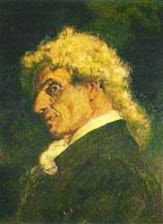
Mikhail Glinka (1804 - 1857)
An Aragonese jota
In that cozy atmosphere, he got to know a local merchant, Félix Castilla, who was also an excellent guitarist. One afternoon, Castilla played for him a traditional folk dance, a jota aragonesa. It was what Glinka was looking for. The melody became the basis for one of his most popular works. Entitled Capricho brillante sobre la jota aragonesa, he began writing it in Madrid where he moved later and where he finished it at the end of 1845.

Capricho brillante sobre la jota aragonesa - Obertura Española No. 1
Despite Glinka's interest that audiences in Spain would appreciate his attempt to integrate the Spanish sound into the Western musical tradition, the work was not premiered in Spain but in Warsaw three years later, in 1848.
Also known as Spanish Overture No. 1 (No. 2 being the somewhat less celebrated Noche de verano en Madrid, from 1851), it is presented here in two versions.
The first, a choreographed reduced version, danced by the Igor Moiseyev Ballet of Moscow, on the occasion of the centenary of the birth of the great Russian choreographer and dancer Igor Moiseyev (1906 - 2007).

Complete original version. Glinka's orchestration is remarkable here for its extensive use of multiple orchestral colors. With several instrumental combinations, he is able to produce a lush, full sound. And when required, he resorts to harp and pizzicato strings to imitate the sound of the guitar.

The edition is by the Zhukovsky Symphony Orchestra, conducted by Vladislav Ivanovskyi.

Thursday, February 17, 2022

Shostakovich, Piano Concerto no 1


Comrade Joseph Vissarionovich Dzhugashvili, so-called Stalin, did not immediately realize that the opera Lady Macbeth of the Mtsensk District, a work by the composer Dmitri Shostakovich, was anti-democratic from head to toe, and alien to the artistic inclinations of the Soviet people. Premiered in 1932 with resounding success, the work remained on the bill for two years until the unlucky day when Joseph Vissarionovich Dzhugashvili attended the first performance of the Bolshoi Theater in Moscow. As a result of such a visit, the play was withdrawn from the stage, losing overnight its status as a masterpiece.


Surviving the purges
It was the first confrontation that the author of the Funeral March in Memory of the Victims of the October Revolution had with the Soviet authorities. It would not be the last. But, as it turned out, comrade Dmitri knew how to navigate in troubled waters.
Dmitri survived the purges of 1948 by remaining serene and composing the soundtrack of a curious film – The Unforgettable Year 1919 – which sang of the courage of the young Comrade Stalin during the war against the White Russians. But for many years he refrained from joining the Communist Party. He only decided to do so in 1960, at a stage in his life when it was not easy to scold a world-famous Soviet artist.

The "confession"
And by the early thirties she had overcome Lady Macbeth's impasse in the style in vogue. That is, by means of a confession. Musical in his case: his Symphony No. 5, from 1937, was subtitled "A Soviet artist's response to just criticism". Nevertheless, confessions aside, it was possible to contrast the orthodox voice, to oppose the ideological mandate, by simply composing for oneself. In this spirit, Dmitri Shostakovich finished his first Piano Concerto in 1933, at the age of 27.

Concerto for piano, trumpet and string orchestra, in C minor
According to the composer himself, the original idea was to compose a concerto for trumpet and orchestra, to which he later added the piano part to build a double concerto, but the involvement of this instrument was gradually increased until the work finally became a piano concerto with the prominent contribution of a trumpet, especially in the last movement. Its premiere took place in Leningrad (i.e. St. Petersburg) in October 1933, with Shostakovich at the piano.

The "quotations"
With a "neo-baroque" combination of instruments and stylistically close to neoclassicism (not counting the cluster at minute 20:54 that interrupts a "circus-like" trumpet), the concerto adds to its undeniably playful character an abundant series of "quotations" to other authors, among them, Ravel, Beethoven and Haydn. This is undoubtedly true, but there are those who have taken things to the extreme, pretending to see in minute 1:06 (and of course, every time the "motif" is repeated) a "quotation" to the first movement of the Appassionata sonata.

Movements:
Depending on how you look at it, the concerto has, or three, or four movements, due to the fact that the third, in addition to its brief duration, links without pause with the last.

00:00  Allegretto - Two contrasting themes

07:14  Lento - Surprisingly lyrical (quote from Ravel, adagio from the G major concerto)

15:32  Moderato - More like an interlude

17:32  Allegro con brio - Contains the Haydn and Beethoven parodies, with some ragtime, too.

The rendition is by Daniil Trifonov, accompanied by the Marinsky Orchestra, conducted by Valery Gergiev.

Tuesday, February 15, 2022

Manuel de Falla, "El amor brujo", suite


Such was the eagerness of Manuel María de los Dolores de Falla y Matheu for setting foot in Paris, back in 1904, that he dared to participate simultaneously in two musical skills contests while in Madrid after his family moved there from his native Cadiz.
One of them summoned pianists, with a first prize consisting of an instrument donated by the piano builder who organized the contest. In the other, he had to compete with a symphonic work or an opera, whose royalties, if he won, would allow him to travel to the City of Light.

A double winner
Manuel de Falla was victorious in both contests. But the one he was most looking forward to, in which he won with the operetta La vida breve, turned out to be a fiasco. The ambiguous wording of the contract did not assure in any way that the piece was going to be performed, at all events. And there was just no theater that would take the risk with a novel composer.

On tour
Falla overcame his frustration by joining as a pianist a mime company that was preparing to tour France, Belgium, Switzerland and some German cities. Thus, the composer found himself in Paris in 1907, at the same time as his fellow countryman Albéniz, who was working hard on the Iberia suite, while Debussy was writing the triptych Imágenes, and Ravel was busy working on the Spanish Rhapsody.

"El amor brujo"
Manuel de Falla (1876 - 1946)
After the outbreak of war in 1914, Falla returned to Madrid. And the first thing he did was to accept a commission from a gypsy artist, Pastora Imperio, who asked him to compose for her something as simple as "a song and dances". Falla responded with a "gitanería" in two scenes for small orchestral ensemble, which tells the story of a gypsy girl who wins back an indifferent lover with the magic of love; the story ends happily. This was not the case with "gitanería". Premiered at the Teatro de Lara, in Madrid, in April 1915, with the title "El amor brujo", the work was not well received.

Versions and arrangements - Ritual fire dance
In view of the failure, the following year Falla rewrote the work for symphony orchestra, dividing it into two tableaux and adding three mezzo-soprano songs. In late 1930, he took four pieces from the original "gitanería" and turned them into a suite for piano. But before that, in 1924, he had made the arrangement that has survived to the present day. It is the ballet version, a one-act "ballet-pantomima", which was the most successful of all and the one commonly heard in concert halls as an orchestral piece, consisting of thirteen pieces, including the popular "Danza ritual del fuego", which can be heard from minute 09:40 in the version of the Radio Kamer Filharmonie ensemble, conducted by the Spanish conductor Alejo Perez.

Monday, February 14, 2022

Dvorak, Violin Concerto in A minor


A celebrity of his time, the composer, teacher, conductor and brilliant violinist Joseph Joachim did not hesitate for a moment in sending back, "amended", the works for violin that younger composers would send to him reverently dedicated, in order to ask for his opinion and heed his invaluable advice. The master, aware of his worth, did not merely review the solo parts but also gave his opinion on the structure of the work and its orchestration.

Joachim, Bruch and Brahms
This had been the case with Max Bruch's G minor concerto in 1865, and later with Brahms' D minor concerto of 1878. Both – Bruch somewhat more compliant than Brahms – obeyed without question and obsequiously adopted his indications. Their works were premiered by Joachim and published with the dedication clearly marked.

This was not the case with Antonin Dvorak, who took two years to respond to the modifications Herr Professor Joachim had suggested for the Concerto in A minor that Dvorak had respectfully sent him in 1879.

Dvorak and Joachim
They had met the year before. After the meeting, Dvorak began work on a violin piece intended for Joachim. As had happened with Beethoven's violin concerto – practically rediscovered by Joachim in 1844 and thereafter turned into the well-known piece of our days – Dvorak doubted that there would be another violinist capable of revealing to the European musical scene a work with such effectiveness.

Dvorak, young (1841 - 1904)
Joachim's misgivings
Joachim had expressed interest in premiering the work. He would gladly do so, he said, but then added that as it was, the public would surely find it a bit coarse, "especially because of the orchestral accompaniment, which seems rather dense". He waited for a response for two years, after which Joachim invited the composer to a private premiere at the music school he directed. There, in the company of Dvorak's publisher, Joachim demanded a little more, this time encouraged by the publisher, who joined in the criticism.

Premiere, in the absence of Joachim
Dvorak, slightly exasperated, requested that the work be published immediately, to which the publisher finally agreed. The dedication to Joachim was maintained, but for the premiere another violinist had to be found, who unveiled it in Prague in October 1883. And although the work was soon as popular as Beethoven's concerto, Herr Professor Joachim never agreed to play it.

Concerto in A minor opus 53 - Movements

02:00  Allegro ma non troppo   - At its conclusion, it connects without pause with the second movement.

12:14  Adagio ma non troppo 

23:22  Allegro giocoso, ma non troppo   - A tribute to the composer's Czech musical heritage.

The rendition is by German violinist (and also pianist) Julia Fischer accompanied by the Tonhalle Orchestra Zurich, conducted by David Zinman, on the occasion of 2014 BBC Proms. As an encore, Julia Fischer presents us with the third movement of Paul Hindemith's sonata in G minor.

Saturday, February 12, 2022

Giuseppe Tartini, "The Devil's trill" sonata


Giuseppe Tartini, violinist and baroque composer, author of about 135 violin concertos and about 200 sonatas, is today known and remembered mainly for one sonata for violin and basso continuo, in G minor. Rather, for the sonata's last section, which incorporates a famous trill, popularly called "the devil's trill", a nickname originated in a legend that, allegedly, Tartini himself was responsible for forging and spreading.

Early years
Born in 1692 in Piran, then a city of the Republic of Venice, today part of Slovenia, being very young he was sent by his parents to follow the ecclesiastical career in a monastery. As soon as he could, however, he dropped out to enroll in the university of Padua to pursue studies of law and music, where he ended up being very popular as a swordsman. He married in 1710 a young girl somewhat younger who turned out to be the favorite of the bishop of Padua, who accused him of abduction, forcing him to hide in a convent.
It was there that he learned to play the violin.

Giuseppe Tartini (1602 - 1770)
A remarkable violinist
Exceptionally gifted for the instrument, in 1720 he assumed the position of principal violinist and chapel master of the Basilica of St. Anthony in Padua, and over the years he gained a wide and widespread reputation as one of the most notable violinists of the time. Retired in 1765, he remained at the basilica teaching until 1768, when a stroke left him severely disabled. He died in 1770, the same year as the birth of Beethoven eight months later.

Sonata for violin in G minor - "The Devil's trill"
As the astronomer Jerome Lalande tells in a travel book of 1765, Tartini himself would have told him about a dream he had while he remained hidden in the monastery, under the protection of the bishop:

“One night I dreamed I had made a pact with the devil for my soul. Everything went as I desired: my new servant anticipated my every wish. I had the idea of giving him my violin to see if he might play me some pretty tunes, but imagine my astonishment when I heard a sonata so unusual and so beautiful, performed with such mastery and intelligence, on a level I had never before conceived was possible. I was so overcome that I stopped breathing and woke up gasping. Immediately I seized my violin, hoping to recall some shred of what I had just heard; but in vain. The piece I then composed is without a doubt my best, and I still call it “The Devil’s Sonata,” but it falls so far short of the one that stunned me that I would have smashed my violin and given up music forever if I could but have possessed it.”

The sonata, published 28 years after Tartini's death, is in four movements. The last one contains the famously demanding passage (13:26) where the violinist trills while simultaneously playing arpeggiated triads.
The version offered here is for violin and piano. On violin, the South Korean artist Ko-Woon Yang. Her compatriot Chiharu Aizawa, at the piano.