Páginas

Wednesday, July 20, 2022

Beethoven, String Quartet Op 59 No 1


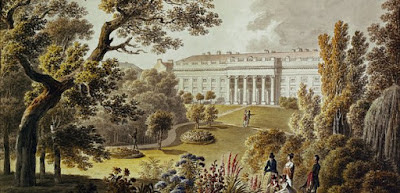
The son of a Ukrainian peasant whose life was changed thanks to Catherine II for favors received, the young Count Andréi Razumovsky, also a violinist, was proud to have studied Haydn's quartets with the composer himself. For this reason, he had sometimes played second violin in the Schuppanzigh Quartet that entertained the soirées at the home of Prince Lichnowsky, Beethoven's patron. In 1790, Razumovsky had been appointed ambassador of the Russian Empire in Austria and since then he had been living in Vienna, distant from peasantry.

Razumovsky's commission
On the occasion of these evenings, he met Beethoven, and in 1805 he ventured to ask the master to compose a series of string quartets, which, although he did not specify in number, must necessarily be inspired by Russian tunes or in imitation of them. In case Beethoven was not sufficiently familiar with Russian music, he gave him a good batch of folk songs.

But the master from Bonn paid little attention to the recommendations of the personage despite his high investiture and only included themes from Russian folklore in two of the three quartets -known today as "Razumovsky Quartets". He finally delivered them to the count at the end of 1806, after eight months of work – while simultaneously composing the Leonora Overture No. 3 and the Fourth Symphony –, thus adding three more works to the production in the genre started in 1801 with the Six Quartets of opus 18, dedicated to Prince Lichnowsky.

String Quartet Op 59 No 1 in F major
The first quartet of the trilogy includes in its final movement one of the Russian melodies provided by Razumovsky, for whom Beethoven did not spare titles when writing the dedication: "[...] Count Razumovsky, Privy Councillor of His Majesty the Emperor of all the Russias, Senator, Knight of the Orders of Saint Andrew and Alexander Nevski and Grand Cross First Class of the Order of Saint Wladimir". A few years later, the Count will add to these credentials the title of Prince.

Quartets for a future era
Premiered by the Schuppanzigh Quartet at the Razumovski Palace in Vienna, the Opus 59 string quartets suffered the same fate as his first symphonies in those years, provoking dismay and incomprehension among his contemporaries. It is said that Beethoven would have replied to his critics that they had not been written for them but for a future era.

Movements:
00 Allegro
11:30 Allegretto vivace
20:28 Adagio molto e mesto
33:14 Allegro (The Russian theme, atacca without pause)

The performance is by a remarkable String Quartet consisting of young students from the New England Conservatory, in Boston.

Monday, July 18, 2022

Leos Janacek, "Kreutzer Sonata"


"Kreutzer Sonata" is the subtitle of the String Quartet No. 1 by Czech composer Leos Janacek. It is so named because it is inspired by Leo Tolstoy's novel of that name, which in turn owes its title to the homonymous sonata for violin and piano by Ludwig van Beethoven.
Tolstoy's story summarizes the sad experience of a girl who, after a forced marriage to the one she does not love, seeks refuge in the arms of an evil lover, which will lead her to death. Janacek "musicalized" this story, with the intention of paying homage to the ladies who, during their lives, never found their true beloved.

Leos Janacek
Born in Hukvaldy, Moravia, into a very modest family, Leos Janacek was a child prodigy who had to work hard to develop his talents. It is said that during his piano and organ studies in Prague in the 1970s, when he did not have his own piano, he decided to practice on a keyboard drawn on his desk. Despite all this, in 1875 he finished his studies brilliantly and with the best grades. The following year, he began to earn his living in Brno as a music teacher and choir conductor.

Leos Janacek (1854 - 1928)
Author of eight operas
Leos Janacek is an author hard to classify, because although musically formed in the nineteenth century his music appears as more typical of the twentieth century, perhaps because its evolution was slow until the time he came to consolidate a style of his own. The author of eight operas, Jenufa, from 1904, stands out among them, and among his orchestral compositions, the symphonic poem Taras Bulba, from 1918, deserves special mention.

String Quartet No. 1 - "Kreutzer Sonata"
At the end of his creative period, Janacek tackled chamber music by delivering two exceptional creations: the two string quartets, the first of them from 1923 (the second, from 1928) and which is presented here in a rendition by the Czech chamber ensemble Kubin Quartet, during a live performance in Ostrava, Czech Republic, in 2013. The work lasts around 16 minutes.

Movements:
00        Adagio - Con moto
04:00  Con moto
07:56  Con moto - Vivace - Andante
11:38  Con moto - Andante

Sunday, July 17, 2022

Ravel's Bolero, "a capella"


The musical expression a cappella denotes music sung without accompanying instruments. And it means "in the manner of the chapel" because it comes from the times when the music heard in churches was only sung. It is thus opposed to the cantata which, of course, is sung, but accompanied by instruments. An outstanding example of a cappella music is the Gregorian chant, typical of Catholic ritual, born around the ninth and tenth centuries.

The Swingle Singers
In the 20th century, a vocal group born in 1962 from an idea of the American vocalist Ward Swingle went a little further. Not only did he do away with instruments, but he proposed to replace them with onomatopoeias and the vocal technique known as scat singing. They are the famous Swingle Singers born in France in 1962 and, after their dissolution, reborn in London in 1973, and still active today.

One of their most famous works was their version of the aria in G from Bach's Suite No. 3, a task that today would be child's play compared to what they were later able to do, with, for example, the vocal version of Tchaikovsky's 1812 Overture or the no less famous Bolero by Maurice Ravel.

Ravel's Bolero, a cappella
The group currently consists of seven members: two sopranos, a contralto, two tenors, a baritone and a bass. Although they may occasionally be supported by a double bass and some percussion, the version of the Bolero presented here is entirely a cappella. Only seven people have been able to create this astonishing eight-minute version of Ravel's popular piece (the original version lasts seventeen, approx.).

And if anyone has ever wondered what exactly is the rhythmic – or melodic – pattern known as ostinato, just pay attention to the basses that are heard neatly at the beginning of the piece, and which, as the ostinato that it is, will be maintained without variation or respite until the end.

Saturday, July 16, 2022

Chopin, Nocturne Op 27 No 1


Chopin, the piano teacher
While living in Paris from 1831 until his death in 1849, Chopin's major income came from his private lessons. Since the renowned professor Kalkbrenner (from whom he refused to take lessons) charged 25 francs an hour, Chopin opted for more modest fees, and until before becoming intimate with George Sand in 1838 (who suggested 30), the Polish master charged only 20. Even so, his annual income during his early years in Paris was around twelve thousand francs on average, to which he would later add a pittance from the sale of his music to his publishers (17,000 francs in all for his lifetime's work) plus a couple of concerts that occasionally left a profit.

The pupils
His students were mostly ladies, a good number of them amateurs, although he also had more talented pupils. Countesses, baronesses, and aristocratic girls would come to the house where the master was living (he lived in nine homes in Paris). Chopin's house had to be furnished in such a way that it did not clash with the ancestry of his pupils. All the more reason why he himself had to dress like a dandy to match the occasion. A few brief words to a friend give us an account of his relative well-being and his need for personal grooming:

"Today I have five lessons to give, do you think I am making a fortune? Don't be fooled, the cabriolet and the white gloves cost more than what I earn... but it wouldn't be in good taste to lack them".

The Nocturnes from Opus 27 
It seems that the Countess of Appony, the wife of the Austrian ambassador, was not among his pupils, but Chopin was a frequent guest in her salons. In retribution for so much hospitality, we suppose, the two nocturnes of Opus 27, written in 1836 and published in Paris in 1837, are dedicated to her.
They belong to the third published series of a total of twenty-one nocturnes, after the first three of opus 9 and the three of opus 15. From opus 27 onwards, Chopin will send the nocturnes for publication in groups of only two.

Nocturne Opus 27 No 1, in C sharp minor
The first nocturne of the series is considered by scholars to be the pearl of the collection, "the most fervent dream Chopin ever entrusted to the piano" (although the second, Opus 27 No. 2 is second to none). Structured in ABA form with a coda, the singing rests on an arpeggiated left hand, common to most nocturnes, and which is one of the most remarkable innovations Chopin's piano ever gave to the world. The overtly passionate middle section adds the necessary contrast.

The outstanding performance is by the brilliant Ukrainian pianist Valentina Lisitsa.

Friday, July 15, 2022

Alexander Glazunov, Violin Concerto


Born in St. Petersburg in 1865 into a well-to-do family, Alexander Konstantinovich Glazunov began studying piano at the age of nine and decided to try his hand at composition at eleven. He chose the right path, because soon after he had finished his First Symphony, which after a year had its premiere under the baton of Mili Balakirev. The reception was so warm that the young musician found himself, overnight, becoming a distinguished Russian composer. He was 16 years old. Not long after, Liszt would conduct his opera prima in Weimar.

The Conservatory and the exile
A disciple of Rimsky-Korsakov, by the end of the century, he had already made a name for himself before age 35. A professor of composition at the St. Petersburg Conservatory, he then took over its leadership in 1905, a position in which he would remain until 1928, when, taking advantage of an invitation to Vienna to commemorate the 100th anniversary of Schubert's death, he left Russia, never to return. Glazunov did not feel comfortable at the head of this school, he disagreed that music could be a vehicle for propaganda.

Alexander Glazunov (1865 - 1936)
An excessively formal symphonism
And just as Soviet Russia had branded him a "bourgeois artist" and accused him of not being "Russian" enough, Western Europe began to label his music as excessively "Europeanized". Finally, the composer, in his sixties, no longer seemed to please anyone. Moreover, based in Paris, his eight symphonies could not avoid the competition of those of Brahms, Bruckner, or Mahler.
In his later years, Glazunov, like Rachmaninoff (whose First Symphony Glazunov was rumored to have premiered being a little drunk), was openly considered an "old-fashioned" composer.

Concerto for violin and orchestra in A minor, opus 82
Glazunov had experienced his finest hour twenty years earlier, when he was appointed director of the Conservatory. From that time dates what is perhaps his most enduring work, the Concerto for violin and orchestra in A minor. Composed in 1904, it had its premiere in St. Petersburg on February 15, 1905 (three weeks after the outbreak of the revolutionary events of that year).

Movements
Despite the lack of sections or parts clearly identified by the author, it is customary to consider that the work consists of three movements. Other views point to four. Or a single movement in sonata form, if it is agreed that the "second" movement is part, strangely, of the "first" —a Glazunov oddity, attached to this elegant and romantic work.

00       Moderato
04:26  Andante sostenuto
14:50  Allegro

The performance is by violinist Julia Fisher, accompanied by the Bamber Symphony, under the baton of Czech conductor Jakub Hrůša.