Claude Debussy wrote his two books of Piano Preludes between the end of 1909 and the first months of 1913. Both collections consist of twelve preludes, presenting at the time the editorial novelty that the delicate descriptions with which they are known today were placed by Debussy at the end of the pieces and not at the beginning, as was usual. Perhaps the purpose was that these brief and somewhat picturesque descriptions would work as a reflection, a second thought inspired by the music and not the other way around.
La fille aux cheveux de lin is the description Debussy added to the end of Prelude No 8, from Book I. A mere two pages of delicate, superbly designed music that, in terms of popularity, are on a par with the renowned Moonlightfrom the Bergamasque Suite from 1890, or the symphonic poem Prelude to the Afternoon of a Faun from 1894.
The Innocence or the Candor Debussy took the title from the homonymous poem by his compatriot Leconte de Lisle, one of his Chansons écossaises that outlines the image of a flaxen-haired girl, which the aesthetics of the time associated with innocence, or candor. Very much in tune with this portrayal, Debussy's piece is surprising for its melodic and harmonic simplicity, far removed from his own style for the time and rather close to the character of his early compositions.
(Among these youthful compositions, there is a melody with the same title, never published, dedicated to Madame Vasnier, a soprano with whom Debussy was romantically attached between 1880 and 1884, and to whom he dedicated about twenty songs, all inspired by poems of French authors).
The first public performance of the piece took place, along with the rest of the preludes from Book I, in London on June 2, 1910.
The superb version presented here is by the German pianist Katharina Treutler.
Dmitri Shostakovich's Symphony No. 7, called "Leningrad", is a work brought to completion in wartime and premiered in the most heroic manner imaginable. On June 22, 1941, German troops invaded Russia as part of a plan conceived the previous year, "Operation Barbarossa". By the end of July, the capital Leningrad (i.e. St. Petersburg, then and now) was completely surrounded. The city's siege lasted precisely 872 days, from September 8, 1941, to January 27, 1944. It was the longest siege of a city in history and the most costly in terms of civilian and military lives.
Although it is possible that Shostakovich had begun composing the symphony before the invasion, the fact is that when the siege began he was working there, in Leningrad, as a professor at the Conservatory (he was a fireman there during the siege). There he finished the first three movements. Months later, he and his family were evacuated, completing the symphony in Kuibyshev, the provisional capital, on December 27, 1941. Its premiere took place there on March 5, 1942. Astoundingly, five months later, it premiered in the besieged city.
A year after the siege, the only remaining orchestra in the city, the Leningrad Radio Orchestra, was inactive because a number of its members had been wounded or were dead. So when its conductor called its members for the exceptional rehearsal of a new Shostakovich Symphony, only fifteen showed up. Most of them were starving: the wind players fainted after the first few notes. Musicians had to be brought in from the front. The first rehearsals did not last an hour, due to general exhaustion. Meanwhile, the Luftwaffe bombing did not stop.
Shostakovich, a fireman in Leningrad
Music for the enemy ranks
Under these incredible conditions, with only one rehearsal of the complete work achieved only that morning, the Symphony was performed in the Great Hall of the Philharmonic on August 9, 1942. Through loudspeakers installed throughout the city in the direction of the enemy ranks, it could also be heard by German soldiers (and Finns, who also took part in the siege).
[A comprehensive article on the conditions, preparations and logistics involved in this incredible performance can be found here.]
Written in the key of C major, the Symphony is nearly 80 minutes long, and consists of four movements: Allegretto / Moderato (poco allegretto) / Adagio / Allegro non troppo.
The First Movement is presented here, with Gennady Rozhdestvensky conducting the Symphony Orchestra of the Ministry of Culture of the USSR, which we assume will have disappeared, or at least, changed its name.
First Movement - Allegretto The first movement opens with a sweeping, resolute theme that plays an important and prominent part in the Symphony. An ensuing group of themes radiates a relaxed, carefree warmth. In lieu of a development section, Shostakovich instead gives us a protracted orchestral crescendo on a theme over an insistent rhythmic pattern. He called this the “invasion theme,” and, initially, it was interpreted to represent the German invasion of Russia. But Shostakovich was clear about its double meaning – “I was thinking of other enemies of humanity when I composed the theme.” It begins innocently, non-threateningly, soft and seemingly in the distance, and becomes increasingly ominous and terrifying as it gains in volume and proximity. It is one of the most remarkable passages in Shostakovich’s symphonic output; at its climax – distorted, tremendous, horrific – the composer brings back the opening theme, a gesture of defiance and heroism in the face of the invasion. (This paragraph, taken from LA Phil site).
Just as the French Suites of the baroque master are only French because they were published under the title Suites pour le clavecin, the English Suites are not English either. The origin of the title is a complete enigma. They were never published during Bach's lifetime, but a handwritten copy once existed with the inscription "fait pour les Anglois". Then speculations began, ranging from a wrong interpretation of what was written (someone understood "Anglois" where it could say something else) to the possibility that they were indeed written for an anonymous English nobleman who would have requested them to Bach during a visit to Köthen. The debate continues.
The Six "English" Suites
The group of six keyboard suites was likely composed in the 1720s, shortly before the French Suites, and possibly in Köthen where the master served as Kappellmeister from 1717 to 1723. Speculation aside, they must have been composed for the private use of pupils, relatives, and acquaintances. Whoever did read "Anglois" may also have read "Angoisses", griefs, given the difficulty of many of its movements.
The dances, or movements
Like the "French" suites, the six "English" suites maintain the traditional structure, with their four movements, or dances: allemande - courante - sarabande - gigue, to which are added, between the sarabande and the gigue, a variable number of supplementary movements such as a minuet, a gavotte, bourré, or an aria. The difference is that in the "English" Bach incorporated a prelude, at the beginning (as expected), which will no longer appear in the later French suites.
It is the section that is often played as an encore after a performance. Its great technical complexity lends itself to the performer's brilliance.
Prelude from the English Suite No. 2 in A minor
Just over four minutes of a remarkable exercise in counterpoint. The outstanding rendition is by a beautiful and very young Martha Argerich, in a 1969 recording. The video, badly edited, starts late, missing a couple of notes at the beginning, but it is still very worthwhile.
The three waltzes grouped in opus 70 are posthumous. They were published in Berlin in 1855, six years after Chopin's death. The decision was made by his friend and pianist Julian Fontana (a Pole of Italian origin), after consultation with Chopin's mother and his sister Ludwika. The last of them, No. 3, is actually the first of the three that he composed. And it was not far from being marked as the first waltz of all his work in the genre, since it is only preceded by thetwo waltzes of opus 69, from 1827.
Waltz opus 70 No 3, in D-flat major
It was composed in 1829, when Chopin was back in Warsaw after his first trip to Vienna. At that time, Chopin seemed to be in love with a fellow student at the Warsaw Conservatory. In a letter to his friend Tytus Woyciechowski, he points out that in this waltz he evokes "a charming being". Chopin does not give names because "...I know that it is not necessary to draw your attention to that detail: you will feel it yourself," he confesses.
Konstancja
The charming being is Miss Konstancja Gladkowska, a singing student, who will appear repeatedly in the correspondence that the young master maintains with his friend Tytus. He will tell him, for example, that he has been her piano accompanist. Later, he will confess that the Adagio of the Concerto No. 2 (chronologically, the first) was inspired by his charming fellow student.
A simple piece
Although "deliciously polyphonic" according to scholars, the piece is rather simple. With an A-B-A structure (a first theme, second, return to the first), it presents no major technical difficulties, other than a couple of left-hand trills, which demand a sonority as elegant as it is substantial.
The rendition is by Martin Leung, an American pianist born in Hong Kong. A delicious two-minute a half of music.
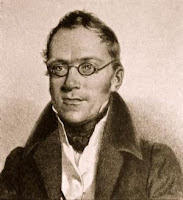
Karl Czerny, the Viennese composer and pedagogue, is remembered today mainly for his pedagogical work. Every piano student has had to deal with his etudes and exercises on speed and fingering. Not for nothing is he considered one of the fathers of modern piano technique. As a teacher, he taught Liszt. As a student, he was a pupil of Hummel, Salieri, and Beethoven. He was a child prodigy, as befits every great pianist.
Beethoven's pupil
At the age of nine, when he was already composing and handling the standard repertoire, he was introduced to Beethoven in Vienna, for whom he played the Pathetique Sonata. Beethoven wrote to his father: "The boy has talent. I accept him as a pupil. I will teach him myself. Send him to me once a week."
Czerny received lessons from the master from 1800 until 1803. Two years later, he needed a recommendation. This is what Beethoven wrote, in 1805:
"I, undersigned, have the pleasure of attesting that young Karl Czerny has made an extraordinary advance on the piano, beyond what could be expected at the age of 14. I think he deserves all the help he can get, not only because of what I have just stated but because of his amazing memory."
Karl Czerny (1791 - 1857)
A vast oeuvre Indeed, Czerny was one of the great pianists of the first half of the 19th century. In 1812 he premiered his master's Emperor Concerto in Vienna. But he did not like to play in public. He did not tour much either, preferring to stay in Vienna and compose, in which he was prolific: his oeuvre totals more than a thousand published opus numbers, including masses, symphonies, concertos, and sonatas. He never married, and at his death he left an important fortune.
Variations on a theme by Rode The 20th century, however, had forgotten him as a composer. Until 1940, when Vladimir Horowitz discovered some interesting variations, stemming from his writing. They are variations on "La Ricordanza", an aria by Pierre Rode, a French violinist and composer.
After Horowitz's discovery, the master and great pedagogue Karl Czerny has enjoyed a modest rebirth, rescuing part of his work in the last twenty years; the compositional work we say, because his pedagogical contribution has been continuously present for two centuries.
The performance is by the South Korean pianist Sangyoung Kim.