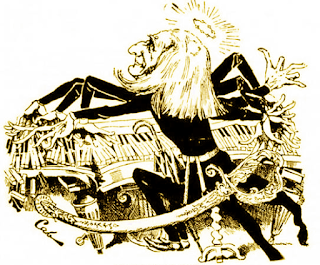
For English speakers, the popular title of "Hammerklavier" that Beethoven's sonata No. 29 bears may seem rather rude. That title could suggest the idea of a sonata in which the pounding of the piano is a necessity. Nothing could be further from that.
The title, which the work shares with the preceding sonata, is simply the German word for "pianoforte." Beethoven wanted to thank the English piano builder Broadwood, who had recently sent him a modern piano with swinging strings. It is for this modern piano that the sonata is written: Große Sonate für das Hammerklavier, its full title.

It is a cliché to say that this monumental sonata is the most respected and studied by music lovers, but at the same time, the least loved or liked of the 32 sonatas by the master from Bonn. Regarded as unplayable by many 19th-century pianists (with the remarkable exception of Liszt), it is the first sonata for which Beethoven added metronomic indications, specifying the speed at which it should be played.
The required speed
This requirement, added to those inherent to the craft, has led renowned performers to suggest that the master's metronome must have been damaged because the speed demanded seems unattainable. On the contrary, those who trust in the goodness of the artifact of those years claim that Beethoven simply created a work that is sustainable at a certain speed and no other. We believe that the truth is on the side of the latter.

Lasting about 45 minutes at the required speed, it is the longest sonata written by the master and at the same time the most difficult. As for its structure, Beethoven returned this time to organize the sonata in four movements, which he had not done since 1802 (opus 31 No. 3).
Four movements
The initial allegro is introduced by a few measures whose most relevant characteristic is its rhythmic aspect.
It is followed by a brief scherzo of just under three minutes.
In opposition, the subsequent adagio (which here goes as the third movement and not second as was common) is one of the longest slow movements in all piano literature, about twenty minutes, and one of the most dramatic written by Beethoven: appassionato e con molto sentimento, the master noted.
The last movement is the most ambitious, the one containing the famous fugue, in three voices, whose theme or subject extends for ten bars (min 34:15, in this version) and not the typical two or three of the baroque fugue, thus raising the technical and interpretative demand to incredible extremes.
It is followed by a brief scherzo of just under three minutes.
In opposition, the subsequent adagio (which here goes as the third movement and not second as was common) is one of the longest slow movements in all piano literature, about twenty minutes, and one of the most dramatic written by Beethoven: appassionato e con molto sentimento, the master noted.
The last movement is the most ambitious, the one containing the famous fugue, in three voices, whose theme or subject extends for ten bars (min 34:15, in this version) and not the typical two or three of the baroque fugue, thus raising the technical and interpretative demand to incredible extremes.
Dedication
Like so many others, the work is dedicated to Archduke Rudolph of Austria, the highest-ranking aristocrat and the most cultured of Beethoven's noble friends. Composed between the summer of 1817 and the autumn of 1818, it is inserted in the vital period of the master in which deafness is total and hopeless. It is in these circumstances that the master of Bonn will reach the highest point in the piano production of his last period.
Sonata No. 29 in B flat major, Op. 106
00:00 Allegro
11:24 Scherzo: Assai vivace
14:12 Adagio sostenuto - appassionato e con molto sentimento
31:50 Largo - Allegro - Fuga: Allegro risoluto
The rendition is by the brilliant Chinese pianist Yuja Wang, in a recital on May 14, 2016, at the legendary Carnegie Hall, where not for being in New York the audience does not cough between movements (Yuja didn't find it funny at all).